


On-Call Legal

eFiling in San Francisco, CA

Need a document e-filed with the San Francisco Superior Court? On-Call Legal e-files complaints, motions, ex parte applications and proposed orders through a court-approved Electronic Filing Service Provider, set up the way the court’s e-filing special instructions require.

eFiling covers every civil case type the court takes electronically, from new complaints to probate and complex matters. You get the conformed copy back once the court accepts the filing.

Request eFiling in San Francisco.

San Francisco eFiling

eFiling for San Francisco Superior Court cases

San Francisco eFiling at a glance

  • Mandatory since
    December 8, 2014, under Local Rule 2.11
  • Court portal
    Closed May 15, 2018; approved providers only
  • E-filing manager
    File & ServeXpress
  • Filed-that-day cutoff
    11:59:59 p.m. on a court day
Quick answer

San Francisco Superior Court e-filing runs only via vendors on the court's list, with File & ServeXpress acting as e-filing manager. We prep each upload, send you the stamped version after acceptance, and hand-carry a printed duplicate whenever a judge must approve or act on the paper, which the court's rules require.

eFiling in San Francisco, CA

San Francisco has required represented parties to file electronically since December 8, 2014, and it closed its own portal on May 15, 2018, so every e-filing now goes through an approved provider. The court’s special instructions are strict about details other courts overlook. The title typed into the provider’s form has to match the caption, every separately uploaded document needs its own caption page with the clerk’s blank space, and exhibits grouped in one upload need slip sheets, not blank pages. Miss one and the clerk can reject the filing without warning you before your deadline runs.

On-Call Legal e-files through an approved Electronic Filing Service Provider under Code of Civil Procedure section 1010.6, Rule of Court 2.253 and Local Rule 2.11, and we prepare each upload before it goes in: titles, caption pages, slip sheets and the 300 dpi scanning minimum. Self-represented parties and non-parties are not required to e-file, and a few first filings still go on paper. We check the case type, the fee and the format on our end, because a problem caught before submission costs minutes and one caught after a rejection can cost a day.

Once the court accepts a filing, we return the file-stamped conformed copy. If the court rejects it, we tell you the reason and the fix. Alongside eFiling, we also serve the documents you file, so a summons can be filed and served through one office.

2014
Year eFiling became mandatory for represented parties
2021
New general civil complaints join the mandate
300 dpi
Minimum scan resolution the court requires
$150
Jury deposit posted by e-filed notice

San Francisco Courts We eFile In

On-Call Legal e-files with the San Francisco Superior Court. Civil filings are processed by the Civil Division at the Civic Center Courthouse on McAllister Street, and papers for probate and family law follow their own e-filing rules, so we confirm where a document belongs first. The court lists these locations:

Civic Center Courthouse

400 McAllister St., San Francisco, CA 94102

Civil, probate and family law; the Civil Clerk’s Office is in Room 103.

Hall of Justice

850 Bryant St., San Francisco

Criminal and traffic cases; criminal records are kept here.

Polk Street Annex

575 Polk St., San Francisco

One of the four locations the court lists.

Juvenile Justice Center

375 Woodside Ave., San Francisco

Juvenile justice and juvenile traffic.

The team e-files complaints, motions, ex parte applications, answers and proposed orders in general civil, complex, asbestos and probate cases, all through court-approved providers. Paper courtesy copies go to the department that will act on the document. Our coverage runs across San Francisco.

eFiling Services We Handle in San Francisco

On-Call Legal e-files the full range of California civil documents. Each type carries its own fee, portal format, and timing rules, and we check all three before a filing leaves our hands. Here is what we take off your desk:

Complaints and Initiating Documents

E-filed since January 4, 2021, when the court extended mandatory eFiling to new general civil complaints. For a new case the document title field carries the party names only, as the court’s instructions ask.

Motions, Oppositions, and Replies

Each motion and supporting paper uploaded as its own document in one transaction, each with a caption page, timed to the notice periods of Code of Civil Procedure section 1005.

Ex Parte Applications

E-filed and set for the Department 206 calendar at 11:00 a.m., Tuesday through Friday, or in the assigned department.

Answers, Demurrers, and Cross-Complaints

E-filed against the service-triggered response deadline, with the proof of service uploaded as its own captioned document.

Proposed Orders, Stipulations, and Judgments

Uploaded as a standalone document with its own caption page. The court lodges it and shows it as filed only after the judge signs.

Exhibits and Lodged Materials

Grouped exhibits uploaded behind a caption page with an “Exhibit A” style slip sheet before each one; items that cannot be uploaded are delivered to the clerk on paper.

If you are not sure how a filing should be uploaded, send us the documents and we confirm the case type, the fee and the format before it is submitted. Call us or order online to get started.

Why On-Call Legal for eFiling in San Francisco

Attorneys and paralegals hiring a San Francisco eFiling service care about three things: an upload the clerk will accept, the right fee attached, and hearing about a rejection in time to fix it. On-Call Legal e-files under Code of Civil Procedure section 1010.6 and Local Rule 2.11, and follows the court’s e-filing special instructions for titles, caption pages and exhibits. We watch every submission to acceptance and flag a rejection when it comes in. The same office serves the documents you file, retrieves records, prepares subpoenas and runs messenger deliveries across San Francisco.

Rush eFiling in San Francisco

Rush eFiling and the Midnight Rule

Standard jobs are submitted at the next available slot, and rush moves you ahead in the queue when a hearing or deadline is close. Under Code of Civil Procedure section 1010.6(b)(3), a document received electronically between 12:00 a.m. and 11:59:59 p.m. on a court day is deemed filed that day, and one received on a non-court day is deemed filed the next court day.

eFiling through an approved provider

Filing Through an Approved EFSP

The court has no portal of its own. It named File & ServeXpress as its e-filing manager for general civil, complex civil, family and probate cases, and it takes filings from the providers on its approved vendor list, including subsequent filings in asbestos, complex litigation and probate cases. We file through an approved provider, with the fee the document type requires.

eFiling across San Francisco case types

Every Civil Case Type the Court e-Files

Mandatory eFiling in San Francisco reaches first filings in general civil cases and later filings in nearly every civil and probate case type, unlawful detainers included since July 1, 2020. Exceptions such as small claims, the first filing of a civil harassment petition and an unlawful detainer’s first filing and summons are listed in Local Rule 2.11(D). We check your case type against that list before we submit.

Real-time filing status and conformed copies

Conformed Copies and Status Tracking

You see when the document is submitted, when the court accepts it and when a clerk flags a problem. File-stamped copies appear on the court’s Online Services site the day after the filing is processed, and the Register of Actions stays the official record. We send you the conformed copy as soon as it posts.

Rejection handling and filing corrections

Formatting and Rejection Prevention

San Francisco rejections tend to come from its own instructions: a typed title that does not match the caption, a caption page missing the clerk’s blank space required by Rule of Court 2.111, blank pages used as slip sheets, or a redacted version filed without its unredacted twin in the same transaction. We check each of those before submission, and if a rejection still comes back, we fix the document and refile.

All-inclusive legal support services from OnCall Legal

Full Litigation Support

One office for the whole job. Alongside eFiling we serve the documents you file, retrieve court records, prepare subpoenas and run messenger deliveries across San Francisco.

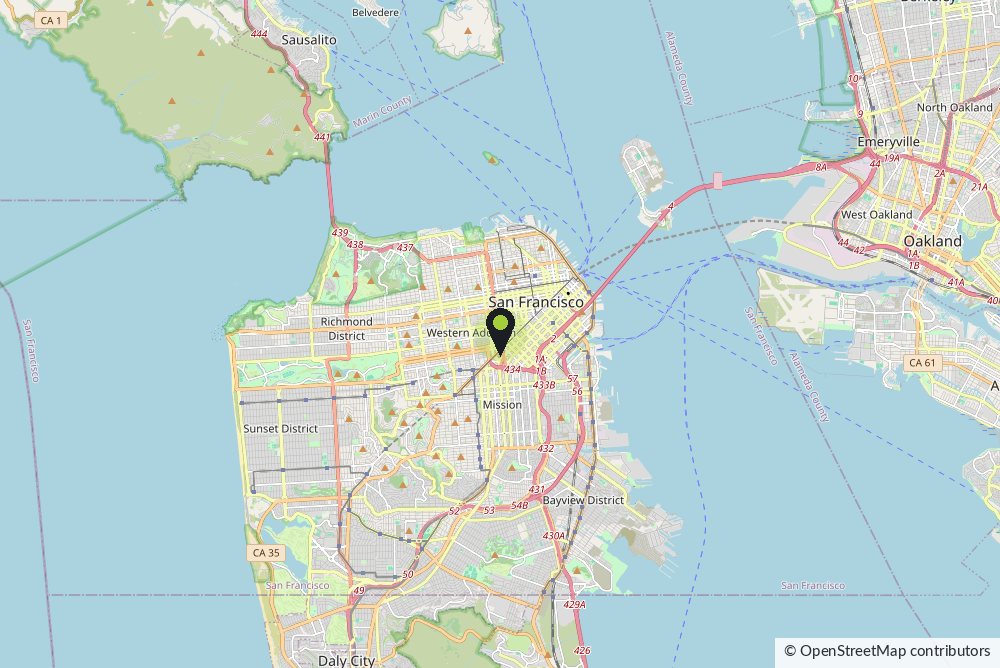
Map of San Francisco

Courtesy Copies Where Required

E-filing does not end the job in San Francisco. Local Rule 2.7(B) requires a paper courtesy copy of every document that needs a judge’s review, action or signature, delivered to the department, and the court’s instructions say the judge will not review or sign the document until that copy arrives. We deliver it and return the conformed copy once the filing is accepted.

    01

    Titles, Caption Pages and Slip Sheets the Court Checks

    The court’s e-filing special instructions spell out what a title must say: the party filing, the nature of the document, the party it targets and the relief sought, as in “Defendant ABC Corporation’s Request for Dismissal of Plaintiff John Smith’s Complaint.” The title typed into the provider’s form must match the caption word for word.

    Each separately uploaded document needs a caption page that leaves the clerk’s blank space in the upper right, between lines 1 and 7, with the court’s title starting on line 8, under Rule of Court 2.111. Grouped exhibits are separated by slip sheets that read only “Exhibit A,” “Exhibit B” and so on.

    02

    Filing Under Seal Without a Rejection

    A sealed filing in San Francisco has two halves that must arrive together. The redacted and unredacted versions go in the same transaction, the first caption page of each marked REDACTED or UN-REDACTED in bold, underlined capitals under the title, and the unredacted version is filed as conditionally sealed until the court rules.

    Paper courtesy copies of the unredacted document are lodged with the department in an envelope labeled “lodged conditionally under seal,” with the caption page taped outside. In complex cases, the confidential passages are highlighted so the judge can tell them apart.

    03

    Fees Paid Through an E-Filed Cover Letter

    Several payments in San Francisco are made by e-filing a short cover letter with a specific document type, which the court accepts as fee paid without filing it. Sanctions use “Sanction Payment,” the $150 jury deposit uses “Jury Deposit for First Day of Trial,” and a court reporter fee uses “Notice of Payment for Court Reporter Fee.”

    The annual pro hac vice renewal fee of $500 is paid the same way, and if it is not e-filed by the anniversary of the order, the attorney’s status ends on that date. We prepare and submit these notices with the right document type.

    Request eFiling in San Francisco

    On-Call Legal offices

    On-Call Legal has no office in San Francisco. Its offices are in Los Angeles, Century City, Irvine, Glendale and Sacramento, listed on the contact page.

    Contact Us

    Please fill in the form below. A member of our team will contact you to finalize the order.

    Quick Links

    Court Websites


    Court Forms


    California Secretary of State


    Superior Court Holidays


    Federal Rules and Practice Procedures

    eFiling Guides for San Francisco Cases

    eFiling in San Francisco? A few questions come up before a document goes to the court. These guides walk through them:

    On-Call Legal services in San Francisco

    eFiling in other California cities

    5 out of 5 stars

    “Hands down 👊 the best attorney Service out there!”

    Vernon C. Tucker, Esq.

    5 out of 5 stars

    “Highly recommended! By far the best company we have used. Very fast service of process. Website is easy to use and the people there know what they are doing.”

    Ashley B

    5 out of 5 stars

    “They are very reliable and prompt. I like the ease of using the service.”

    Jay Rahimi

    Frequently Asked Questions About eFiling in San Francisco

    Common questions from attorneys, paralegals, and self-represented filers about eFiling in San Francisco. If your situation isn’t covered, call (310) 858-9800 and the team will walk you through it.
    What time does an e-filing count as filed in San Francisco?

    Any time up to 11:59:59 p.m. on a court day, under Code of Civil Procedure section 1010.6(b)(3), which the court applies to civil e-filings. The rule does not reach criminal motions, which the court has not opened to mandatory eFiling; those are filed in Room 101 under Local Rule 16.2, though e-filing them remains an option.

    Is e-filing mandatory in San Francisco?

    Yes, for represented parties in civil cases, since December 8, 2014. The court extended the mandate to later unlawful detainer filings on July 1, 2020 and to new general civil complaints on January 4, 2021. Self-represented parties and non-parties are encouraged, not required, to e-file.

    Which San Francisco cases can still be filed on paper?

    The court lists them: small claims, False Claims Act cases, sister-state, labor and summary judgments, petitions to consent to medical treatment, appeals of Labor Commissioner awards and name or gender changes, plus only the first filing in name change, civil harassment and unlawful detainer cases. Every later filing in those cases is e-filed, and Local Rule 2.11(D) lists document-level exceptions.

    What happens if the court rejects my filing?

    The provider emails the rejection with the reason and the name and phone number of the clerk who rejected the document. If a call helps, the court asks callers to reach that clerk with the Transaction ID ready, an eight-digit number that starts with 77, 78 or 79. We fix the document and refile, and because we submit ahead of the deadline, there is usually time to do it.

    Can a represented party be excused from eFiling?

    Only by court order. Under Rule of Court 2.253(b)(4), the party files an ex parte application for relief from mandatory eFiling, heard in Department 206 or the assigned judge’s department, with notice to every other party, a declaration under penalty of perjury showing undue hardship or significant prejudice, and a proposed order. The applicant must attend the hearing.

    What are conformed copies, and do I get them back?

    A conformed copy is the document bearing the court’s file stamp. San Francisco posts file-stamped copies of e-filed documents on its Online Services site the day after the filing is processed, and we send yours as soon as it posts. Proposed orders are different: they stay lodged and show as filed only after the judge signs.

    How do motion deadlines and electronic service affect my filing date?

    Notice periods run off the filing and service date under Code of Civil Procedure section 1005, and electronic service moves them too: section 1010.6 extends a notice period by two court days when a document is served electronically. Tell us your hearing date and we work backward from it, then flag any window that looks too tight before we submit.

    How do I e-file large exhibits in San Francisco?

    The court lets you upload exhibits with the document they support, on their own with caption pages, or grouped with slip sheets, and a large exhibit can be split into parts labeled “Part 1 of 4” and so on, each with a caption page. Items that cannot be uploaded at all are delivered to the clerk on paper.

    How do I get a summons issued on an amended complaint in San Francisco?

    Wait until the e-filed amended complaint or cross-complaint is accepted and its file-stamped copy is posted on the court’s website, then submit the summons by mail or in person. The court still issues summonses in paper, along with abstracts, writs, subpoenas and orders of examination.

    How do I pay sanctions or jury fees through eFiling in San Francisco?

    By e-filing a cover letter or notice with the case name, number, payer and amount, under the document type the court assigns: “Sanction Payment” for sanctions, with the order attached, or “Jury Deposit for First Day of Trial” for the $150 jury deposit. The court accepts the document as fee paid and does not file it.

    Can I e-file a fee waiver application in San Francisco?

    Yes, in any case that is e-filed, under Rule of Court 2.252(f). If the waiver is denied, the fees are paid by e-filing a cover letter or notice of payment with the document type “Fee Waiver Denial Payment.”

    4.7 ★★★★☆
    Based on 23 Google reviews
    Reviews from Google, ordered by relevance. Showing ratings of 4 stars and above.