
What Is a Deposition Officer?
Quick answer
A deposition officer is the neutral, authorized person who handles a deposition on behalf of the legal process, not either side. In California, this most often means the officer who receives and copies subpoenaed business records or the officer who swears the witness and records testimony at an oral deposition. Either way, a deposition officer protects the integrity of the evidence so it holds up in court.
On-Call Legal has provided deposition officer services since 1999, with well over 15 years of California legal support and coverage across all 58 California counties and all 50 states. As members of NAPPS and CALSPro, our team logs each step with a timestamp in a client portal and delivers court-acceptable proof of production, plus 24-hour rush and same-day options. If you need a deposition officer in California, contact us today for a free consultation.
This article explains the responsibilities of a deposition officer in California, outlines the workflow for records subpoenas, distinguishes the role from that of a court reporter, notary, and process server, details the associated costs, and describes the steps to become a deposition officer.
Definition and Role of a Deposition Officer

A deposition officer is a qualified person who manages the gathering of sworn testimony or business records for a lawsuit. The role sits inside the discovery process, the phase where each side collects evidence before a hearing or trial. A deposition officer does not represent either party. The job is to keep the process clean, neutral, and admissible in court.
There are two contexts, and they call for different people. In an oral deposition, the officer administers an oath to the witness and creates an accurate record of the testimony. In a records-only deposition, no one testifies. Instead, the officer receives, copies, and holds subpoenaed documents, then distributes those copies to the parties. On-Call Legal focuses on this second context, the records side, where a registered professional photocopier is the deposition officer under California law.
The core duties of a deposition officer usually break down like this:
- Receive and safeguard the records or the sworn testimony.
- Administer the oath at an oral deposition or confirm the custodian’s affidavit for a records subpoena.
- Copy the documents or prepare the transcript.
- Maintain neutrality so no side gains an unfair edge.
- Provide proof of production and documentation of compliance.
- Distribute copies to every party entitled to them.
This service isn’t available at a law library or a walk-in photocopy shop. A deposition officer is a specialized role tied to court rules, not general document handling. Working with a certified process server and a qualified deposition officer under one roof keeps a records subpoena moving without gaps between vendors.
Role vs. Process Server
These two roles are frequently confused, so here is the distinction. A process server delivers legal papers to a person. A deposition officer receives and copies the records that the papers demand or officiates at the deposition itself. The process server hands over the subpoena. The deposition officer handles what the subpoena produces.
Both roles are neutral, and both protect the fairness of the case. But they act at different stages. If you want the full picture of what a process server is allowed to do, that is a separate function from the officer who takes custody of the returned documents. One serves the paperwork. The other manages the production of business records that follow.
Legal Requirements
California sets clear rules for who can serve as a deposition officer, and they differ by role.
For a records-only subpoena, the deposition officer must be a registered professional photocopier under Business and Professions Code section 22450 and following or a person exempt from that registration under section 22451. A registered professional photocopier registers with the county clerk where they live or run their principal place of business and posts a $5,000 bond under section 22455. Section 22451 exemptions include State Bar members and their staff, government employees acting in that capacity, licensed private investigators, and custodians or court reporters copying their records.
A registered process server, on its own, does not qualify as the records deposition officer. That is a common misconception, and it matters. The professional photocopier standard is what governs who may receive and copy the documents.
For an oral deposition, the officer must be authorized to administer oaths. In practice, this is a certified shorthand reporter, and a notary public can administer oaths as well. Under Code of Civil Procedure section 2020.420 and section 2025.320, the officer for either role must be disinterested. The officer cannot be financially interested in the action and cannot be a relative or employee of any party or any party’s attorney. Breaking that rule can trigger a civil penalty of up to $5,000.
Tools and Equipment Used
The work runs on secure handling, not fancy gear. A records deposition officer relies on controlled copying and scanning equipment, sealed delivery envelopes, and a documented chain of custody from the moment records arrive. Each step gets a timestamp, so the paperwork shows exactly who touched the documents and when. That documentation is what makes the production defensible if anyone challenges it later.
The Deposition Officer’s Role in a California Records Subpoena
Most of what On-Call Legal does as a deposition officer runs through a records subpoena, formally a deposition subpoena for production of business records. No witness testifies. The California Code of Civil Procedure governs each step. The goal is to pull documents from a third party, a bank, a hospital, a corporation, or an employer under a controlled process that keeps the evidence admissible. A law firm hires the officer, our team helps fill out and write the supporting paperwork, and the records come back intact. Here’s how that workflow runs in California.
- The subpoena is issued and served. The noticing party designates the deposition officer and serves the subpoena on the custodian of records. The production date must fall no earlier than 20 days after issuance or 15 days after service, whichever date is later, under Code of Civil Procedure section 2020.410. Both prongs apply, so count the later of the two.
- Notice to consumer or employee when personal records are sought. If the subpoena reaches a person’s private records, the serving party must serve a Notice to Consumer under Code of Civil Procedure section 1985.3 or a Notice to Employee under section 1985.6 for employment records. That notice goes out at least 10 days before the production date and at least 5 days before the custodian is served, plus mailing time under section 1013. This step protects the consumer or employee whose documents are in play.
- The custodian delivers records only to the deposition officer. Under Code of Civil Procedure section 2020.430, the custodian delivers, in person, by messenger, or by mail, a true and legible copy of the records plus an affidavit under Evidence Code section 1561. The records go to the officer, not to the attorneys directly. This step is the part that live web pages often get wrong. The registered professional photocopier receives and copies the records. It does not serve the subpoena.
- The officer copies, seals, and holds the records. The deposition officer reproduces the documents, keeps the original records set intact where required, and maintains the chain of custody. Everything stays sealed and neutral. Copying documents this way, under one accountable officer, is what keeps the production defensible.
- The officer distributes copies to the parties. Under Code of Civil Procedure section 2020.440, the officer promptly provides a copy to the noticing party and a copy to any other party who requests one. That request window runs up to six months after the action settles. Every party entitled to the records receives the same set.
Run correctly, this workflow provides every side with identical, verifiable documents. Handling the process meticulously avoids motions and disputes. That’s why the officer role exists as a neutral custodian rather than a favor one side does for itself.
The Importance of a Deposition Officer in Legal Proceedings
A deposition officer keeps evidence trustworthy. When a neutral, authorized officer introduces records or testimony, the other side has far less room to attack how the evidence was gathered. Neutrality is not a nicety here. It is what keeps the production admissible and the case on track. According to the Judicial Council of California, over 4.8 million total cases have been filed in California superior courts, including 886,644 civil filings.
The stakes are real. If an interested party handles the records or breaks the chain of custody, opposing counsel can move to exclude the documents. A defective production can delay a case, cost money, and weaken a strong claim. An admissible production does the opposite. It supports the attorneys, respects the court’s rules, and lets the facts speak.
“People hear ‘deposition officer’ and picture a court reporter, but for a records subpoena the job is different,” says Brandon Yadegar, Director at On-Call Legal. “We receive the records straight from the custodian, copy them under an unbroken chain of custody, and get certified copies to every party, so the production holds up if it’s ever challenged.”
That is the core value the officer provides. The officer is the reason the documents survive scrutiny.
How a Deposition Officer Differs From a Court Reporter (and Notary and Process Server)
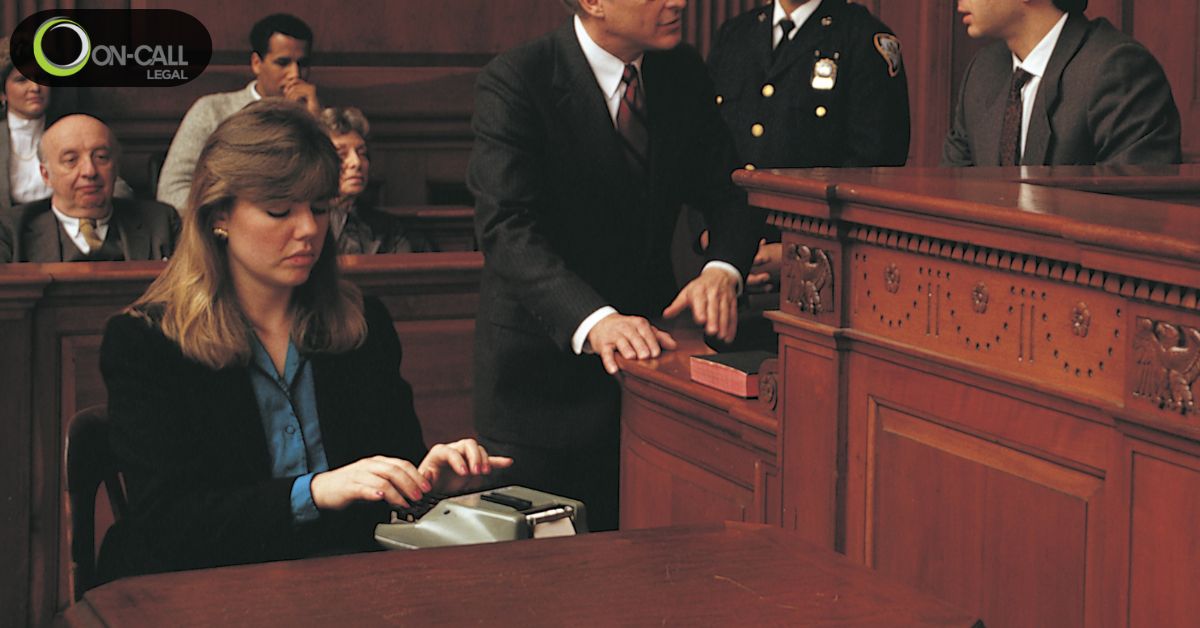
These four roles overlap in people’s minds, but they do different jobs with different qualifications. The table below lays out how a deposition officer, a process server, a court reporter, and a notary public each fit into a case.
| Role | Responsibilities | Qualifications | Typical Scenarios |
|---|---|---|---|
| Deposition Officer | Receives, copies, and holds subpoenaed business records, or administers the oath and records testimony at an oral deposition; distributes copies to the parties | Records role: registered professional photocopier (B&P section 22450) or a section 22451 exemption; oral role: Certified Shorthand Reporter or notary; must be disinterested | Producing bank, medical, or employment records under a deposition subpoena; officiating an oral deposition |
| Process Server | Delivers the subpoena or other legal papers to the named person or custodian; returns proof of service | Registered process server (B&P section 22350 and following); bonded | Serving a deposition subpoena, complaint, or summons on a party or witness |
| Court Reporter | Administers the oath and creates a verbatim transcript of live testimony | Certified Shorthand Reporter licensed by the state Court Reporters Board | Recording sworn testimony at an oral deposition, hearing, or trial |
| Notary Public | Administers oaths and notarizes documents, including a custodian’s affidavit | Commissioned notary public | Notarizing an Evidence Code section 1561 affidavit or witnessing a signature |
In short, a court reporter is the oral deposition officer, and for a records subpoena, the deposition officer is the registered professional photocopier who receives and copies the documents. A notary and a process server support the process but are not, by themselves, the deposition officer.
How to Become a Deposition Officer in California

Becoming a deposition officer in California depends on which role you want. The path for records work is different from the path for oral depositions. Requirements vary by state, so these steps focus on California.
- Decide which role you are pursuing. Records-only work and oral deposition work require different credentials. Pick one before you register anything.
- For records work, register as a professional photocopier. File your registration with the county clerk where you live or run your business, and post the $5,000 bond required under Business and Professions Code section 22455. This is the standard route to serve as the records deposition officer.
- Alternatively, you may qualify for a Section 22451 exemption. State Bar members, government employees in that capacity, licensed private investigators, and a few others may act without separate photocopier registration. Confirm you actually fall inside a listed exemption before relying on it.
- For oral depositions, become a Certified Shorthand Reporter. Qualify and get licensed through the California Court Reporters Board, or serve as a notary public who is authorized to administer oaths. This role lets you swear in witnesses and record testimony.
- Stay disinterested and build the skills. You cannot be tied to a party or a party’s attorney. Beyond that, sharpen your document handling, chain-of-custody discipline, and attention to deadlines. Many people enter this field alongside process serving, and a background as a certified process server can help, but it does not by itself qualify you as a records deposition officer.
Most people who do this work full time join a legal support agency or a records company, where the volume, equipment, and compliance systems are already in place.
Deposition Officer Fees and Costs
Fees for a records subpoena are not guesswork in California. Evidence Code section 1563 sets the reasonable costs a witness or custodian can charge for producing documents, and those figures are the backbone of what a deposition officer bills. The party serving the subpoena is responsible for these costs.
- Standard reproduction: $0.10 per page for ordinary documents up to 8½ by 14 inches.
- Microfilm: $0.20 per page for records reproduced from microfilm.
- Clerical costs: up to $24 per hour per person to locate the records and make them available, billed at $6 per quarter-hour or fraction of a quarter-hour.
- Postage: the actual cost of postage when records are mailed.
- Retrieval: the actual cost charged by a third party to retrieve and return records held at another location.
A few practical notes on who pays. The serving party carries these copying costs and does not have to prepay, but the witness may demand payment at the time the records are delivered. Total cost then scales with volume, complexity, and location. A few pages from one custodian cost little. Thousands of pages, or records that require special processing, cost more.
Records subpoena costs are separate from the fee for an oral deposition, which involves a court reporter and transcript. If you are budgeting for testimony rather than documents, see our guide on how much a deposition costs. Ask any deposition officer to walk you through the fee schedule up front so there are no surprises when the records arrive.
Common Challenges Deposition Officers Handle
Even a routine records subpoena can hit friction. Experienced deposition officers plan for these problems before they start. Here are the ones that come up most.
- Uncooperative custodians or witnesses. A custodian may stall, produce partial records, or ignore the deadline. The officer documents the gaps and works within the rules to keep the production on track. When a person will not cooperate at all, the situation can mirror what happens when someone refuses to be served, and it may take escalation to move forward.
- Tight timelines. Discovery runs on deadlines. The 20-day and 15-day production windows leave little slack, so the officer tracks dates closely and pushes the paperwork before it stacks up.
- Confidential consumer and employee records. Medical, banking, and employment files trigger the Notice to Consumer and Notice to Employee rules. The officer helps protect that private information and confirms every notice went out on time before records change hands.
- Oversize documents and those requiring special processing. Blueprints, ledgers, and other oversize documents do not fit a standard copier. Special processing takes extra time and cost, and the officer plans for it rather than getting caught short.
- Chain-of-custody disputes. If anyone questions how the records were handled, the officer’s timestamped documentation answers it. Clean records of the process are the most effective defense against a challenge.
Ready to Put a Qualified Deposition Officer on Your Case?
A records subpoena only helps your case if the documents come in intact, complete, and admissible. A qualified deposition officer receives the records, copies them under a controlled process, and gets certified copies to every party who is entitled to them. That is the difference between evidence that holds up and evidence that gets challenged.
On-Call Legal has handled deposition services and process serving since 1999, with coverage across all 58 California counties, all 50 states, and membership in NAPPS and CALSPro. Our team logs each step with a timestamp in a client portal and delivers court-acceptable proof of production, with 24-hour rush and same-day options. Put experienced deposition officers on your subpoena and contact us today for assistance.
Frequently Asked Questions
Drawing on our work as deposition officers and process servers across California, here are the questions clients ask us most, with straight answers.
What Does a Deposition Officer Do?
A deposition officer manages the gathering of sworn testimony or business records for a lawsuit. For a records subpoena, the officer receives documents from the custodian, copies them, holds them under chain of custody, and provides copies to the parties. For an oral deposition, the officer swears the witness and records the testimony.
How Much Does a Deposition Officer Cost?
For a records subpoena, costs follow Evidence Code section 1563: $0.10 per page for standard copying, $0.20 per page from microfilm, up to $24 per hour for clerical time, plus postage and retrieval. Total cost depends on volume, location, and complexity. The party serving the subpoena pays.
Can an Attorney Be a Deposition Officer in California?
Not for their own case. A party’s own attorney, or that attorney’s employee or relative, cannot serve as the deposition officer because the officer must be disinterested. An unaffiliated State Bar member may qualify for records-only work under a section 22451 exemption. We break down the nuance in our guide on whether an attorney can be a deposition officer in California.
What Happens if Someone Refuses to Be Served During a Deposition?
A subpoena still carries legal weight. If a person or custodian dodges service or refuses to produce records, the serving party can seek a court order to compel compliance, and the court can impose sanctions. A skilled process server documents each attempt, which supports any motion that follows.
What Qualifications Does a Deposition Officer Need?
For records work in California, the officer must be a registered professional photocopier under Business and Professions Code section 22450 or fall under a section 22451 exemption and must be disinterested. For oral depositions, the officer is usually a Certified Shorthand Reporter or a notary authorized to administer oaths.
Legal Disclaimer
The information provided in this article is for general informational purposes only and does not constitute legal advice. While we strive for accuracy, laws and procedures may vary by jurisdiction and change over time. For specific legal questions, please consult a licensed attorney.



On-demand legal services with arranging services from eFiling to organizing and preparing your subpoena for records and/or personal appearance and much more.