
How Much Does a Private Investigator Cost?
Quick answer
In most cases, private investigators charge between $50 and $200 per hour, while total investigation costs can range from a few hundred dollars to several thousand, depending on the type of case, location, and level of complexity. Whether you need surveillance, background checks, fraud investigations, asset tracing, or specialized investigations, understanding private investigator fees upfront can help you avoid hidden costs and make informed decisions before you hire a private investigator.
With more than 15 years of experience, OnCall Legal provides trusted and professional investigative services tailored to individuals, businesses, and legal professionals across the United States. Our licensed and experienced investigators handle everything from complex investigations and corporate investigations to missing person cases and legal proceedings with precision and discretion. If you need reliable private investigator services, contact us today for a free consultation and personalized cost breakdown.
In this article, you will learn how much it costs to hire a private investigator, the factors that influence the costs, the average amount you should expect to pay, tips to avoid scam PIs, and much more.
Average Cost Ranges for Private Investigator Services in the U.S.
In the United States, most private investigators work for an average hourly rate ranging from as low as $50 to as high as $200 per hour, depending on the type of service. From surveillance to general investigative services, the exact cost for private investigators differs depending on the service.
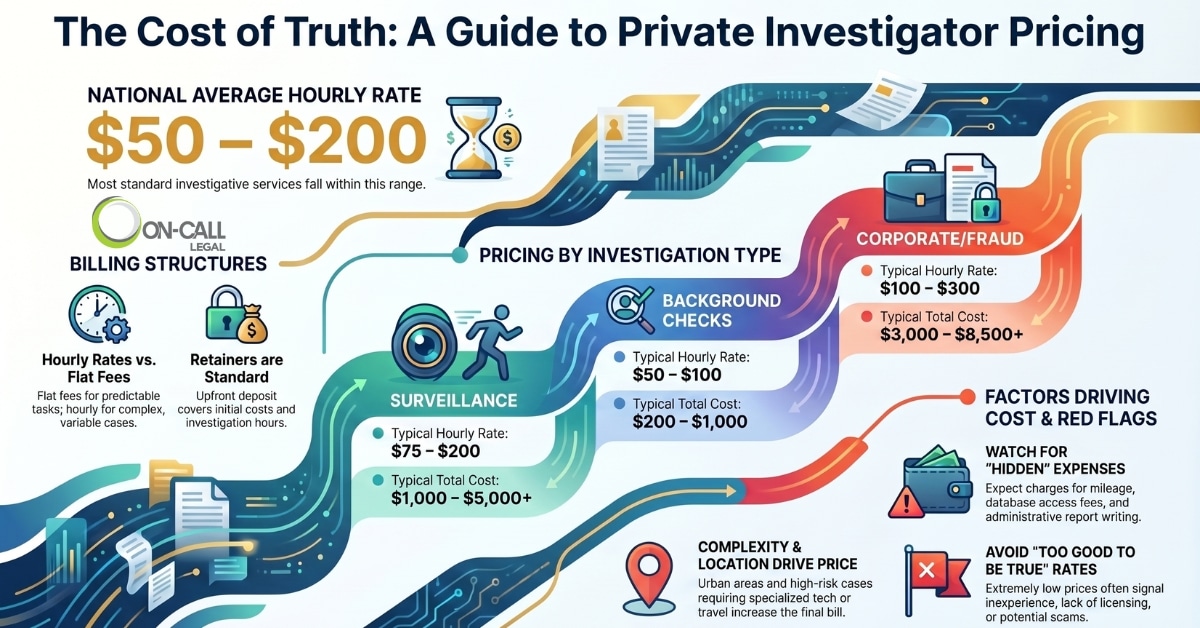
Let’s take a look at the private investigator prices based on the type of investigative service involved.
Surveillance
Surveillance services involve discreetly tracking an individual, a group of individuals, or specific locations to gather information according to clients’ needs. Examples include monitoring phone calls, emails, financial transactions, etc. Surveillance operations usually cost an average of $50-$100 per hour.
Background Checks
Private investigators also conduct thorough research into people’s backgrounds to gather relevant information, such as date of birth verification, criminal records, etc. Basic background checks that include digging up criminal history, addresses, etc., may cost an average of $200 to $600. Private investigator costs for more comprehensive checks, such as research into social media, financial records, or other specialized areas, may exceed $1000.
Missing Persons or Assets Investigations
Experienced private investigators also conduct in-depth investigations to find a missing person or hidden assets. The private investigator’s prices for missing person investigations range from $200 to $500, depending on how complex the case is.
Corporate Investigations
Corporate investigations involve cases associated with a business or organization, such as fraud, bribery, or embezzlement. Because they demand specialized skills and are time-consuming, private investigators usually charge several thousand dollars for such cases.
Legal Support
Lastly, private investigators also assist law firms in finding missing witnesses and legal documents, interviewing witnesses, collecting evidence, and more.
Private Investigator Cost Comparison Table
| Investigation Type | Typical Hourly Rate | Typical Total Cost Range | Additional Expenses | Notes |
|---|---|---|---|---|
| Surveillance Investigations | $75–$200 | $1,000–$5,000+ | Travel fees, equipment | Often requires multiple investigators |
| Background Checks | Flat rate or $50–$100 | $200–$1,000 | Database access fees | It depends on the depth of search |
| Infidelity Investigations | $75–$150 | $1,500–$5,000 | Mileage, surveillance equipment | Standard infidelity investigations may span several days |
| Fraud Investigations | $100–$250 | $3,000–$8,500+ | Forensic analysis, court testimony | Often includes a financial records review |
| Corporate Investigations | $125–$300 | $5,000+ | Specialized tools, travel | Common in intellectual property theft cases |
| Missing Person Cases | $200 to $500 | $1,000–$6,000 | Travel expenses | Complexity affects pricing significantly |
| Asset Investigation | $100–$250 | $2,000–$7,500 | Database research | Asset tracing may involve multiple jurisdictions |
Note that the prices on this blog refer to general costs and do not refer to our fees at On-Call Legal. For a more concise quote tailored to your specific private investigator service needs, contact us to schedule a free consultation and discuss your needs in detail.
Factors That Influence the Cost of Hiring a Private Investigator

The cost of hiring a private investigator in the United States varies widely based on many factors, such as the complexity of the case, the experience of the investigator, location, the specific services required, etc. Let’s break down some of these key factors.
1. Experience and Expertise of the Private Investigator
The more experience and expertise a private investigator has, the higher they will charge. For instance, a private detective with over 15 years of active work in the industry will charge more than one with only two years of experience. Furthermore, private investigators with expertise in a specific area of investigation, such as digital forensics investigators, will likely charge higher fees than an unspecialized private investigator.
2. Geographical Location
For example, urban areas are known for their high cost of living compared to rural areas. As a result, urban-based private investigators may charge more than rural-based private investigators.
3. Nature and Complexity of the Case
The complexity of a case and the risks involved may also impact private investigator charges. A straightforward investigation, such as digging up a person’s phone number or running a basic background check, may cost less than a more complicated case, such as surveillance, financial fraud, or criminal investigation.
4. Tools and Equipment
Tools and technologies such as specialized software, GPS trackers, advanced surveillance devices, and other high-tech equipment can increase what private investigators charge. However, not all cases require the use of these tools.
5. Duration of the Investigation
Generally, private investigators charge more for cases that last for several weeks than those that last a few hours. Furthermore, long-term investigations can attract additional costs, such as unexpected complexities, travel costs, and so on. For instance, many private investigators may need to go to other locations to gather evidence. Such investigations may attract additional costs such as mileage and travel expenses, airfare, hotels, etc.
Common Billing Methods and Packages For Private Investigators

Hourly Rates vs. Flat Fees
Private investigators usually charge an hourly rate or flat fees for their services. Most times, they request flat fees for cases with predictable investigation time, while hourly rates are for tasks that involve unknown variables. Both billing methods have advantages and disadvantages.
Flat fees can help you prepare a fixed budget because you know the total cost upfront. They do not include extra charges due to extended hours. However, if the actual investigation time is less than the estimated time, you may feel like you have overpaid for the case.
Hourly rates are more flexible because clients pay for the exact working hours. However, one disadvantage of hourly rates is that it may be more difficult to estimate the final investigation cost when pre-planning.
Retainer Fees
Private investigators usually demand an initial deposit, called a retainer fee. It covers all costs needed to complete the investigation. On completion, they give you a refund of the unused portion of the retainer fees. Meanwhile, if the fee is exhausted before completing the task, some PIs may initiate a monthly billing cycle.
Hidden Costs and Additional Expenses
Although investigators charge normal fees, they usually exclude certain additional expenses from their normal costs. These additional expenses can amplify your overall bill. They include administrative costs, mileage and travel expenses, special equipment or resources, database access fees, etc. Always ask about these fees when hiring a PI.
The mileage and travel expenses include bills related to lodging, airfare, meals, and other travel expenses. To estimate the total mileage cost, the IRS has standard mileage rates that estimate the cost per mile for different states in the U.S.
Administrative costs include costs associated with report writing, emails, phone calls, meetings, etc. PIs may also charge additional fees to access information from specialized databases.
How to Budget for a Private Investigator
Budgeting for private investigators prepares you against any unforeseen contingencies. The following tips can help you plan right.
Estimating the Total Cost
Budgeting for a private investigator requires thorough planning and precision, considering various factors that can influence the amount. Some actionable steps to create a realistic estimate of hiring costs include:
- Determine the kind of service you need—for example, background checks, surveillance, divorce cases, etc.
- Schedule a consultation with a PI to communicate your needs and provide relevant information about the case.
- Understand the PI’s proposed approach and billing structure to avoid surprises. They should provide a detailed quote defining the fees and estimated hours. Otherwise, ask for it.
- Discuss the investigation’s estimated duration with the PI. In addition, inquire about possible factors that may extend the investigation period.
- Request a written agreement and ensure all fees, terms, and offers are clearly stated. You can ask questions if you need more clarification on anything.
- Plan for unforeseen circumstances to ensure flexibility in your financial plan.
Negotiating Fees

Negotiating fees with PIs is a professional and collaborative approach to getting the same quality of service at an affordable cost.
- First, understand their billing system and request a detailed quote from them.
- If a PI’s quote exceeds your budget, you can negotiate for a possible adjustment.
- Be open and transparent about your financial limitations. The PI may have a solution that fits your budget without compromising value.
- Discuss how the scope of work can change to fit your budget. You can also inquire about less costly alternatives for achieving your defined objectives.
- If the investigation is likely to extend beyond the estimated period, you can request a lower hourly rate.
- Build a good working relationship with your PI to create a positive environment for negotiations.
How to Choose a Private Investigator Based on Cost and Services
Choosing a private investigator based only on price can be a costly mistake. While it may be tempting to hire the cheapest option available, low rates sometimes signal inexperience, limited resources, or even scams. The goal should be finding a reputable private investigator who offers value, transparency, and professional investigative services that align with your specific needs.
Before hiring anyone, confirm that the investigator is properly licensed under state law. Licensing requirements vary across the U.S., and some states impose stricter standards for private investigators than others.
When evaluating a private investigation firm, pay attention to the following:
- Verify that the investigator holds an active state license where required.
- Ask for proof of insurance and professional credentials.
- Read client reviews and request references whenever possible.
- Request a detailed cost breakdown before signing contracts.
- Clarify whether the investigator charges hourly rates, flat fee pricing, or a retainer fee.
- Ask about additional fees, travel expenses, and administrative fees upfront.
- Discuss expected deliverables, including reports, photographs, or court testimony.
- Avoid investigators with unclear billing practices or unrealistic guarantees.
- Be cautious of extremely low prices that seem far below average private investigator rates.
Payment methods and billing policies are also worth discussing during the initial consultation. Some professional private investigators accept installment payments for long-term investigations, while others require larger upfront retainers for complex investigations or specialized services.
Common Warnings to Note When Hiring a Private Investigator

Hiring a scammer or an unreliable investigator exposes you to various risks and dangers, such as privacy breaches, legal issues, fraudulent activities, and many more. However, some identifiable signs can protect you from such PIs. They include:
- Failure to provide proof of licensing. All legitimate PIs should possess current investigation credentials and be licensed under state or local regulations. Check them up at your state’s licensing bureau. An example is the California Association of Licensed Investigators.
- Making unrealistic promises. Investigations are often uncertain, so reliable PIs don’t usually guarantee specific outcomes.
- Pressuring you to make quick decisions. A reliable PI should give you enough time for thorough consideration and decision-making.
- Not having a physical office or online presence.
- Providing contracts with missing details and vague terms.
- Refusing to provide testimonials or references from past customers.
- Having poor or no reviews from previous clients.
- Unprofessional behaviors like unprofessional language, rude behavior, or unwillingness to answer questions.
Need a Private Investigator?
Understanding how much a private investigator costs can help you avoid surprises, protect your budget, and choose the right professional for your situation. Whether you need surveillance, background checks, fraud investigations, asset tracing, or legal support, hiring experienced investigators can make a major difference in the outcome of your case. At OnCall Legal, we provide reliable investigative services with transparent pricing, responsive communication, and results-focused strategies tailored to your needs.
Our team of experienced private investigators has helped clients nationwide handle sensitive investigations with professionalism, discretion, and attention to detail. With more than 15 years of industry experience, we understand how to gather evidence efficiently while keeping clients informed throughout the process. Contact us today for a free consultation and personalized investigation plan.
Frequently Asked Questions
With more than 15 years of experience providing professional investigation services, OnCall Legal understands the questions clients ask most often before hiring a private investigator. From investigation costs and legal concerns to billing practices and service expectations, our experienced investigators help clients make informed decisions every day. Here are answers to some of the most common questions about private investigator cost and investigative services.
How Much Does a Private Investigator Charge per Hour?
Most private investigators charge between $50 and $200 per hour depending on several factors, including location, experience, and case complexity. The national average hourly rate for standard investigative services typically falls between $75 and $125 per hour. Specialized investigations involving digital forensics, fraud investigations, or surveillance may cost more due to the expertise and specialized equipment involved.
Are Private Investigator Fees Negotiable?
Yes, private investigator fees are sometimes negotiable depending on the type of investigation and expected workload. Some investigators may offer flat fee pricing, discounted retainers, or adjusted hourly fees for long-term cases. During your initial consultation, ask for a detailed breakdown of costs and discuss whether flexible payment arrangements are available.
Can a Private Investigator Serve Legal Documents?
Yes, many licensed private investigators can legally serve legal documents depending on state law requirements. Some clients hire investigators specifically because they can locate difficult individuals and conduct surveillance before service attempts. However, laws vary by jurisdiction, so always confirm licensing and compliance requirements before hiring.
What Factors Increase the Cost of Private Investigations?
Several factors influence private investigator cost, including case complexity, travel expenses, surveillance duration, and specialized investigations requiring forensic analysis or digital forensics. Additional fees may also apply for court appearances, administrative work, specialized tools, or GPS tracking devices. More experienced investigators generally charge higher rates because of their expertise and ability to gather crucial evidence efficiently.
Is Hiring a Private Investigator Legal in Every State?
Yes, hiring a private investigator is generally legal throughout the United States when conducted within state laws and regulations. However, investigators must follow privacy laws, surveillance restrictions, and licensing requirements that vary by jurisdiction. Working with a reputable investigator helps ensure your case is handled legally and professionally.
Legal Disclaimer
This article is provided for informational purposes only and should not be considered legal advice. Private investigator laws, licensing requirements, surveillance regulations, and process serving rules vary by state and jurisdiction. Always consult with a licensed private investigator or qualified legal professional regarding your specific situation before making decisions related to investigative or legal services.



On-demand legal services with arranging services from eFiling to organizing and preparing your subpoena for records and/or personal appearance and much more.